HEADLINE NEWS
A NEW CHAPTER: PNL JOINS THE SGS GLOBAL NETWORK
We’re excited to share an important milestone for Phoenix National Laboratories (PNL) and the entire ATS Family of Companies. In January 2026, SGS, the world’s leading testing, inspection, and certification company, announced the acquisition of Applied Technical Services (ATS). This partnership brings together ATS’s strong U.S. presence and technical expertise with SGS’s global network and resources.
For PNL and the other ATS Family of Companies, this means we continue delivering the same trusted services and local expertise our customers rely on—now backed by the strength of a global organization.
What This Means for Our Customers
- Global Reach – Access to SGS’s worldwide network operating in more than 100 countries, allowing us to better support clients with projects across multiple regions.
- Expanded Capabilities – A broader range of testing, inspection, and certification services available through one trusted partner.
- Continued Local Service – Customers will continue working with the same PNL team and technical professionals they know and trust.
While our global resources have grown, our commitment to quality, responsiveness, and strong client relationships remains exactly the same. PNL is proud to continue serving our customers as part of both the ATS Family of Companies and now the SGS global network.

TECHNOLOGY SPOTLIGHT
IMPORTANCE OF QUALIFIED NDT PERSONNEL UNDER NAS 410 AND SNT-TC-1A
In the aerospace industry, the effectiveness of nondestructive testing (NDT) depends directly on the qualification and certification of the personnel performing the inspections. Standards such as NAS 410 developed and maintained under the authority of Aerospace Industries Association (AIA), and SNT-TC-1A developed by the American Society for Nondstructive Testing (ASNT), establish the framework for training, experience, examination, and ongoing performance of NDT technicians. On critical programs supporting the aerospace and defense supply chain, these requirements are essential to ensuring inspection reliability, product integrity, and mission success. While SNT-TC-1A provides a widely recognized, employer based model for certifying NDT personnel, many aerospace primes mandate NAS 410 due to its more prescriptive structure and customer specific controls.
For many aerospace and defense prime contractors, alignment with NADCAP accreditation requirements further elevates the importance of strict compliance with NAS 410 and controlled use of SNT-TC-1A. NADCAP audits place strong emphasis on how personnel are trained, examined, and authorized, including verification of method specific knowledge, vision testing, and oversight by a qualified Level III. In these environments, NAS 410 is typically required because it provides tighter governance over certification, particularly where multiple customers, advanced materials, or flight critical hardware are involved. SNT-TC-1A may still play a supporting role, especially as a foundational framework, but customer and audit requirements often drive full NAS 410 implementation.
This distinction is especially significant for companies performing Radiographic Testing (RT) and Ultrasonic Testing (UT). Radiography requires certified personnel who can properly control exposure parameters, recognize subtle film or digital image indications, and interpret results against complex aerospace acceptance criteria. Ultrasonic testing demands equally rigorous qualification due to the sensitivity of equipment calibration, scan technique, and signal interpretation—particularly for thick sections, composites, or high performance alloys. Both NAS 410 and SNT-TC-1A emphasize competency, but NAS 410 adds enhanced traceability and customer alignment that are critical on aerospace and defense programs.
Ultimately, the disciplined application of NAS 410—supported by the foundational principles of SNT-TC-1A—demonstrates an organization’s commitment to quality, safety, and compliance. When reinforced by successful NADCAP accreditation, it assures aerospace customers that nondestructive inspections are being performed by thoroughly qualified professionals under a robust, auditable system. This commitment not only protects flight critical hardware, but also strengthens long term partnerships with industry leaders at the forefront of aerospace and space exploration.
Given the recent growth in aerospace and military campaigns we have recently made a commitment to upgrading our systems to include NAS 410 with an eye toward NADCAP accreditation. While PNL has traditionally operated under SNT-TC-1A programs, that strong foundational base easily lends itself to NAS 410 and NADCAP compliance. In addition, our parent company, Applied Technical Services, has existing NAS 410 and NADCAP accreditation and experience for us to draw upon.
TECH TALK
TECH TALK - FILM VS CR TO PRODUCE RADIOGRAPHIC IMAGES
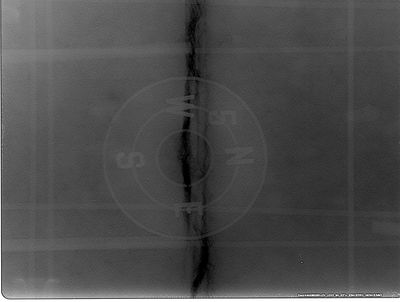
PNL provides radiography services using both film and computed imagery. The benefits and limitations of each technique are often debated within our industry so this quarter we conducted interviews with our technicians and managers asking them to provide their experiences and preferences using traditional film radiography and computed radiography using phosphor image plates (CR) to provide perspective from the people responsible for producing the images. Below are excerpts from those interviews.
What are things you like and dislike about each technique?
CR Likes
- Easier to process images.
- Has more versatility because of greater latitude.
- Don’t need a darkroom - images can be processed almost anywhere with subdued light and processing temperatures ranges are wide.
- Archiving images is done on a computer eliminating storage cabinets.
- Images can be easily shared.
CR Dislikes
- Image plates are fragile and require special handling techniques.
- Software dependent.
- Need power to process images.
- Scanners require quarterly maintenance which is somewhat complicated.
Film Likes
- Can get a high quality image when using a slow film.
- No post processing required to interpret images. The film is the film as is.
- Density measurements are more useful for discontinuity evaluation.
Film Dislikes
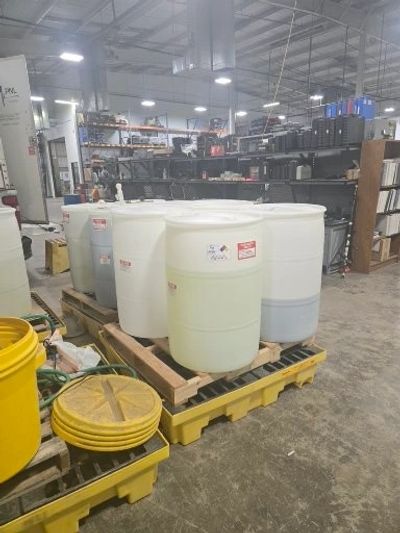
- Chemicals are messy with storage, mixing, and disposal heavily regulated.
- Chemical temperature needs to be precisely controlled which can be difficult.
- Need to have a darkroom available to process images.
- Film sometimes gets lost or damaged and then needs to be reproduced.
- Takes a long time to process film.
- Processing is tricky for assistants to catch on to - film is more easily ruined.
We are primarily focused on using CR whenever possible. What feedback have you received from our Clients about the radiographs being transmitted to them electronically?
- It’s nice to be able to save copies of images in multiple locations.
- Like that images can easily be shared and reviewed using internet meeting programs like Teams or Zoom. This is invaluable and difficult to do with film.
- Can window and level through images using computer mouse to scan through different thicknesses and regions of the image.
- Can have annotations without overwriting or destroying discontinuity details.
- CR is faster in certain production environments.
- Have IT issues installing viewing software with firewall protections in larger companies. (This can be solved by providing .tiff images or using a dedicated laptop that is not connected to company networks.)
How has CR made your job easier or harder?
Easier
- Able to easily audit images to verify quality and interpretation, especially for newly certified individuals who have less experience.
- Can archive images of interesting discontinuities or defects that can be used to train technicians or give examples.
- Can easily grab a CR image or part of an image and insert it into reports.
- Can look at multiple views at one time making interpretation easier and faster.
- Can zoom in on images.
- Can lock in annotations separate from image.
- It is easier to train assistants how to process images without fear of ruining the image like what can happen with chemical film processing.
- Don’t need multiple film speeds to generate good imaging through multiple thickness.
Harder
- Control of scanner settings for some systems make troubleshooting poor image problems difficult because of the large combination of scanner settings possible.
- Training is more complicated and needs a higher level of skill from the technician to operate the scanners and processing software.
If given the choice of using either the film or CR technique, which would you choose and why?
Combined answer
- It depends on the specific aspects of the part or items being radiographed. Both techniques have advantages or disadvantages in certain situations, but the preference is to use CR whenever possible which is by far the majority of situations that we encounter.
Are you familiar with DR and if so, what are your thoughts about PNL providing that service?
Combined answer
- Yes, we are familiar with DR, but some codes, standards, and policies have made transitioning to DR unnecessarily difficult. While there are advantages to using fixed DR plates, they have limited flexibility which limits the applications where they become useful. Once DR plates become more flexible, which is in process, the use of DR will become more prevalent. Eventually we think that the industrial complex will transition to all digital (DR and CR) like the medical industry has. We have noticed that at times it has been difficult to obtain certain film speeds. That would be eliminated with digital imaging.
We hope this information is helpful to the reader. If there are any questions on whether to use CR, DR, or Film radiography, our team of experts are available to answer any questions or have further discussions with you. Please contact our office via phone or email.
Phone: 602-431-8887 or 800-605-1180
Email: pnltest@pnltest.com
SAFETY TIP
COMPARISON OF THE CHEMICAL AND ENVIRONMENTAL SAFETY ISSUES RELATED TO FILM INDUSTRIAL RADIOGRAPHY
Film industrial radiography and computed radiography (CR) differ significantly in their chemical and environmental safety issues. Film industrial radiography relies on chemical processing, including developers, fixers, and rinsing solutions that often contain hazardous substances such as silver compounds, hydroquinone, and acids. These chemicals pose occupational health risks through skin contact, inhalation, or improper handling, and they create environmental concerns related to wastewater disposal and chemical waste management if not treated correctly. In contrast, computed radiography eliminates wet chemical processing entirely, using reusable imaging plates and digital image processing. As a result, CR greatly reduces chemical exposure for workers and minimizes environmental pollution from liquid waste and chemical disposal. However, CR still has some environmental considerations, such as electronic waste from imaging plates, scanners, and digital storage equipment, as well as energy consumption. Overall, computed radiography is generally safer from both chemical and environmental perspectives, while film radiography presents higher risks due to its dependence on hazardous chemicals and waste generation.